
Imagine giving the water from your shower a second job. That’s the simple idea behind grey water recycle systems, which collect gently used water from showers, baths, and sinks. This isn’t wastewater from toilets—that’s called black water—but rather a valuable resource you can repurpose right in your own home.
What Exactly Is a Grey Water Recycle System?

Think of a grey water system as a smart recycling point for your home’s water. Instead of just letting all the water from your daily routines disappear down the drain, these systems capture it, often give it a basic filter, and then send it off for other tasks. It’s an incredibly practical way to turn what was once a waste product into a genuinely useful asset.
The concept is beautifully straightforward: water that’s clean enough for a second, non-drinking use gets a new lease on life. This simple step can dramatically reduce how much fresh, treated mains water your household needs, making your property more self-sufficient and a bit kinder to the environment.
The Clear Distinction Between Grey and Black Water
Getting to grips with the difference between grey water and black water is the first, and most important, step. The distinction is absolutely crucial for both safety and for the system to function correctly.
- Grey Water: This is all the wastewater generated in a home that doesn’t come into contact with the toilet. We’re talking about water from your showers, baths, hand basins, and even washing machines. While it’ll have traces of soap, shampoo, and dirt, it’s still relatively clean stuff.
- Black Water: This is the nasty stuff—wastewater from toilets that contains human waste and harmful pathogens. It needs serious treatment at a municipal facility and is never, ever reused within a home recycling system.
A grey water system is designed only to handle the first type, ensuring the recycled water is perfectly safe for its intended secondary use.
Why These Systems Are Gaining Traction
Here in the UK, the appeal of grey water recycle systems is definitely on the rise, and for some very clear reasons. With utility costs constantly climbing, every litre of water saved translates directly into lower monthly bills. A typical system can slash a home’s mains water consumption by up to 30%, which really adds up over a year.
By capturing and reusing water for tasks like flushing toilets or irrigating a garden, a household can significantly lessen its reliance on the municipal supply. This not only saves money but also reduces the strain on public water infrastructure, especially during dry spells or droughts.
On top of the savings, there’s a real collective shift towards more sustainable living. Homeowners and developers are actively looking for practical ways to shrink their environmental footprint. Putting in a grey water system is a tangible step that conserves a precious resource and contributes to a healthier home. You can learn more about what the best practices for healthy homes are in our detailed guide. It’s no wonder grey water recycling is becoming a key part of modern, eco-conscious building design.
How Different Grey Water Systems Actually Work
When you hear the term grey water recycling systems, it’s best not to picture one single piece of kit. Instead, think of it as a spectrum of solutions, ranging from brilliantly simple setups to much more involved, automated networks. The right system for your property really hinges on your goals, your budget, and what you plan to do with the recycled water.
Let’s get under the bonnet and see how they tick. We’ll start with the most straightforward approach and work our way up to the more advanced systems that can handle a good chunk of a home’s water needs.
This graphic really brings home the impact a grey water system can have, showing average water use against the potential savings from recycling.
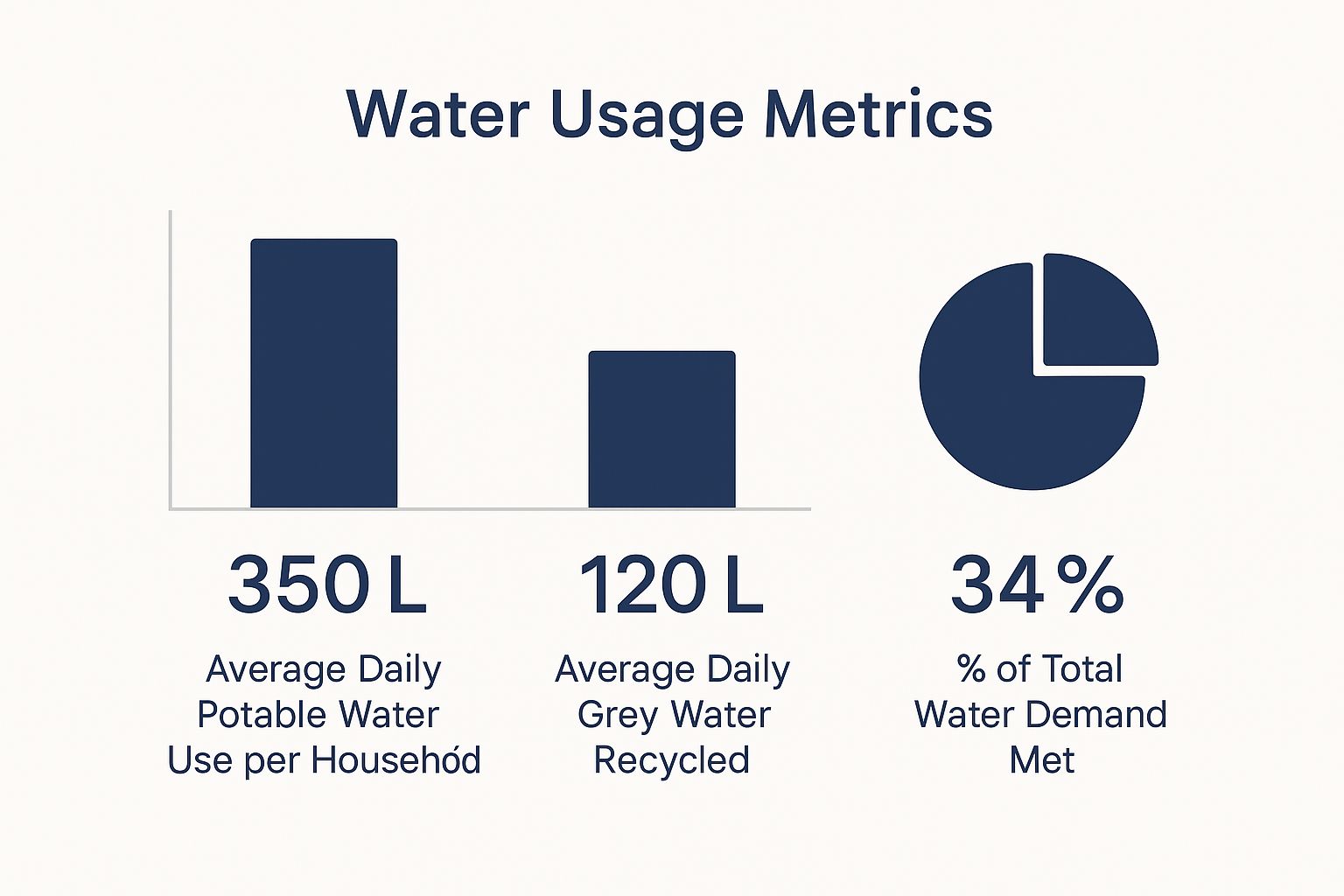
As you can see, recycling grey water isn’t just a drop in the bucket. It can meet a huge portion—often over a third—of a typical household’s total water demand.
Simple Diversion Systems
The most basic form of grey water recycling is a direct diversion system. Picture it as a simple detour for your water. Instead of your shower or washing machine water heading straight for the sewer, a diverter valve simply reroutes it outside to your garden. It’s that easy.
This approach is so popular because it’s simple and cheap. There’s no storage tank and very little filtration—often just a coarse screen to catch hair and lint. The water gets used almost immediately, which is great because it prevents it from stagnating and starting to smell.
A classic example is a “laundry-to-landscape” system. This connects the washing machine’s outlet hose to a branched irrigation network that waters a garden bed. It’s a beautifully efficient, low-tech way to keep your plants happy.
Branched Drain Systems
Taking a step up in complexity, we have branched drain systems. These are still gravity-fed and don’t need pumps, but they are a bit more integrated into your home’s plumbing. They collect water from several sources, like a shower and a bathroom sink, and channel it all into a network of pipes.
These pipes are usually laid in mulch-filled trenches, distributing the water underground right to the roots of trees and larger plants. This subsurface irrigation is incredibly effective because it cuts down on evaporation and gets the water precisely where it’s needed most.
Because these systems operate without pumps or complex filters, their maintenance is minimal. However, they do require careful planning during installation to ensure the pipe network has the correct gradient for gravity to do its work effectively.
Advanced Filtration and Storage Systems
At the top end of the scale, you’ll find automated systems with filtration and storage. These are the true powerhouses of grey water recycling, capable of supplying water for non-potable indoor uses like flushing toilets. Their filtration process is a bit like a high-tech coffee filter, designed to clean up the water and get it ready for reuse inside the home.
Here’s a typical breakdown of how they work:
- Collection: Grey water from showers, baths, and basins is piped to a central collection unit.
- Filtration: The water goes through a multi-stage filtration process. This usually starts with a coarse filter for hair and lint, followed by finer filters to remove soaps, particulates, and other gunk. Some systems even use biological treatment or disinfection methods like UV light.
- Storage: The treated water is held in a storage tank, ready to go.
- Distribution: A small, automated pump sends the water on demand to toilets or an outdoor tap for irrigation.
These systems are a lot more complex and definitely require professional installation to comply with UK Building Regulations. They’re also more expensive, but they deliver the biggest water savings, often slashing mains water consumption by 30% or more.
Comparing Grey Water Recycling System Types
To make sense of the options, it helps to see them side-by-side. The table below breaks down these three common types of grey water recycling systems, highlighting their main differences in application, complexity, and cost.
This comparison should give you a clearer idea of which approach might be the best fit for your specific needs and property.
| System Type | Primary Use | Complexity & Treatment | Typical Cost Range |
|---|---|---|---|
| Direct Diversion | Outdoor garden irrigation (immediate use) | Low; gravity-fed with a simple coarse filter. | £100 – £500 |
| Branched Drain | Subsurface irrigation for larger plants and trees | Low-Medium; gravity-fed with no pump, requires planned pipe layout. | £500 – £1,500 |
| Filtration & Storage | Indoor toilet flushing and washing machines | High; requires pumps, multi-stage filters, and a storage tank. | £2,000 – £5,000+ |
As you can see, the leap in cost and complexity between a simple diversion system and a full filtration unit is significant, but so are the potential uses and water savings.
The Real Benefits of Recycling Your Grey Water

Putting in a grey water recycle system does more than just save a bit of water here and there. It’s a fundamental shift in how your property handles its resources, bringing real financial, environmental, and operational gains you’ll notice almost immediately. We’re moving beyond the technical jargon to what really matters: the powerful rewards of making your water work twice.
The most obvious win is the direct hit to your monthly bills. By capturing and reusing water from showers, baths, and sinks, a property can dramatically slash its dependence on the mains supply. Whether it’s a home or a commercial building, that translates straight into cash savings.
And we’re not talking about trivial amounts. Grey water recycling systems can cut mains water consumption in UK households and commercial buildings by up to 30%. Think about it: toilet flushing makes up roughly a third of all household water use. By using recycled water for this alone, the savings pile up fast.
Take a typical UK household, where each person uses about 140 litres a day. Simply by redirecting shower and basin water to flush toilets, you could save around 45 litres per person, every single day. That’s a huge chunk of your bill gone.
Easing Your Environmental Impact
Beyond your bank account, recycling grey water gives the environment a much-needed break. Every litre you reuse is a litre that stays in our strained rivers and reservoirs, which is especially critical during the UK’s increasingly frequent summer droughts.
It also lightens the load on municipal wastewater treatment plants. These facilities are massive energy hogs, guzzling electricity to pump and purify millions of litres of wastewater daily. By diverting a significant portion of your property’s wastewater from the sewer, you’re helping to cut that energy demand right down.
This directly shrinks your property’s carbon footprint. Saving water means saving the energy needed to treat and move it, which is a big part of creating a more sustainable operation. It’s a key factor when you consider the whole life carbon costs of a building, where day-to-day resource use plays a major role.
Building Resilience and Water Security
Having a grey water recycling system installed gives you a valuable sense of security, especially when water restrictions loom. During long dry spells, hosepipe bans can make it impossible to maintain gardens and landscaping.
With a dedicated supply of recycled grey water, you gain a level of water independence. Your property can continue to irrigate green spaces and flush toilets without drawing from the mains, ensuring operational continuity and preserving landscapes even when others cannot.
This self-sufficiency is a powerful asset. It buffers your property against the unpredictability of climate change, guaranteeing you have a reliable source for all non-potable needs, no matter the external pressures. Before diving deeper, it helps to get a grip on where your water is currently going. A good starting point is understanding your shower’s water consumption. Knowing this is the first step toward saving it, making your property more robust and ready for whatever the future holds.
Planning Your Grey Water System Installation
Moving from an idea to a working system takes a solid, practical plan. Successfully installing grey water recycle systems isn’t about guesswork; it’s about a careful look at your property’s real needs and working through the necessary regulations. This roadmap will walk you through the essential first steps, ensuring your project is efficient, compliant, and correctly scaled right from the start.
The very first job is to balance your supply and demand. You need a realistic picture of how much grey water your home or building actually produces versus how much you’ll need for things like flushing toilets or watering the garden. This simple bit of maths helps you avoid a common mistake: fitting a system that’s either too big and wasteful or too small to do the job properly.
Sizing Your System Correctly
To get started, you’ll need to do a basic water audit. This is just a case of estimating the daily grey water coming from showers, baths, and basins. To put it in perspective, a typical person in the UK uses around 140 litres of water per day, and a good chunk of that becomes grey water.
Next, figure out your property’s non-potable water demand. How many toilets will be connected, and how often are they flushed? What does your garden or landscaping need in terms of irrigation?
- Supply Calculation: Add up the likely volume from showers and sinks. A family of four, for example, might generate 200-300 litres of grey water every day.
- Demand Calculation: Tally up the water needed for toilet flushing (roughly 6 litres per flush) and any garden watering you plan to do.
- System Sizing: The goal is to choose a system where your daily supply comfortably meets or is slightly more than your demand. This gives you a reliable source without needing to store large amounts of untreated water for too long.
Getting the size right is the cornerstone of effective grey water recycling. It ensures you get the most out of your investment while keeping installation costs and the physical space needed for the kit to a minimum.
Key Practical Considerations
Once you have a rough size in mind, you can turn your attention to the nuts and bolts of the installation. Where will everything go? How does it connect to your existing plumbing? Thinking this through now saves a lot of headaches down the line.
You’ll need to find good spots for the main components, like the collection tank and any pumps or filters. These bits of kit need dedicated space, often in a basement, utility room, or even buried outside. Don’t forget to think about access for future maintenance – it’s crucial. While planning your setup, it might also be worth looking into complementary tech like whole-house water filter solutions which can integrate for an even more robust water management strategy.
The most crucial step is ensuring the entire installation complies with UK Building Regulations and plumbing codes. A professional installation is not just recommended; it’s essential for safety, compliance, and functionality.
Navigating UK Regulations and Compliance
In the UK, any grey water recycle system plumbed into a property’s internal pipework has to meet specific standards. This is to completely eliminate any risk of cross-contamination with your drinking water supply. The main standard you need to know about is BS 8525-1, which lays out the code of practice for designing, installing, and looking after these systems.
A professional installer will make sure every part of your system meets these legal requirements, from correct pipe labelling to fitting backflow prevention devices. It’s a smart move to get a detailed site survey done before you commit to the full installation. This initial assessment is like a mini feasibility check; you can learn more about why that matters by understanding the feasibility study definition and how it de-risks a project. This upfront work makes sure your plan is not only practical but fully compliant from day one, setting you up for years of safe and efficient water recycling.
Keeping Your System Running Smoothly

A great system is one you can rely on year after year, and that kind of dependability comes down to simple, consistent care. The good news is that maintaining grey water recycle systems isn’t complicated, but it is vital for keeping them efficient, safe, and long-lasting. With just a little routine attention, your system will be a hassle-free part of your property.
Think of maintenance as a quick health check-up for your system. Its main job is to stop tiny issues from snowballing into bigger, more expensive problems. By far the most critical task is regularly checking and cleaning the filters, which basically act as the system’s lungs.
These filters are your first line of defence, trapping all the hair, lint, and soap gunk before it can create clogs or nasty smells. A blocked filter doesn’t just reduce water flow; it puts a real strain on the pump and can seriously compromise the quality of your recycled water.
Your Simple Maintenance Checklist
Sticking to a straightforward schedule makes all the difference. Here are the core jobs to keep your system in top nick, preventing the most common headaches before they even start.
- Weekly Check: A quick visual once-over is all it takes. Look for any drips or leaks, listen for any strange noises from the pump, and just make sure water is flowing where it should be. It takes minutes but can catch a problem early.
- Monthly Filter Clean: This is the big one. You’ll need to remove the main filter and clear out any gunk that’s built up. Most can be rinsed clean with a hose, keeping everything flowing freely.
- Quarterly Tank Inspection: Pop the lid and have a look inside the storage tank. You’re just checking for any sediment or sludge building up at the bottom. A clean tank is key to preventing blockages and keeping the water quality high.
- Annual Professional Service: Once a year, it’s a smart move to get a qualified technician to give the whole system a proper check-up. They’ll inspect the pump, electrics, and disinfection unit (if you have one) to make sure it’s all working as it should.
A clean filter is the single most important factor in maintaining good water quality and system pressure. Neglecting this simple step is the root cause of most common grey water system problems.
Troubleshooting Common Issues
Even with the best care, you might run into the odd hiccup. The good news? Many are simple to diagnose and fix yourself, saving you the hassle and cost of a call-out.
If you notice low water pressure—say, a toilet cistern that’s taking forever to fill—the first place to look is always the filter. Nine times out of ten, a blockage here is the culprit.
Another common worry is an unpleasant smell. If your system starts to get a bit whiffy, it’s a sure sign that water is sitting stagnant somewhere. This could be from a blockage stopping it from flowing properly or sludge building up in the tank. Giving the filter and tank a thorough clean will almost always sort it out. At the end of the day, consistent maintenance is the key to a healthy, odour-free grey water recycle system.
Of course, here is the rewritten section.
Grey Water Recycling Success Stories in the UK
Theory is one thing, but seeing grey water recycle systems working in the real world is where it gets really interesting. Across the UK, homes and businesses are proving this technology isn’t just a futuristic concept; it’s a practical solution delivering tangible results right now. These stories bring the benefits to life and show just how versatile modern systems have become.
From suburban family homes to bustling city hotels, the applications are incredibly varied. Each installation tells a story of unique challenges, clever solutions, and, ultimately, significant savings in both water and money.
The Suburban Family Home Transformation
Think about a typical four-person family in the south-east of England, an area often hit with summer water restrictions. Before they made a change, their water bills were a constant headache. By fitting a mid-range automated system, they started capturing all the water from their daily showers and baths.
This water, once cleaned by a compact filtration unit in their utility room, now supplies all three of their toilets. The result? They’ve slashed their mains water consumption by over 30%, leading to a very noticeable drop in their quarterly bills. The system just hums away in the background, making them far more resilient during hosepipe bans.
Success in the Commercial Sector
Commercial properties, with their massive water consumption, present an even bigger opportunity. A modern hotel in a major UK city is a brilliant example. With hundreds of guests showering every day, the sheer volume of grey water is immense. The hotel installed a large-scale, sophisticated grey water recycle system to capture this valuable resource.
The system collects, treats, and then pumps this water back into the hotel’s plumbing network, specifically for flushing toilets in every guest room and public area. The scale of this is seriously impressive:
- Daily Savings: The hotel now saves tens of thousands of litres of fresh mains water every single day.
- Financial Impact: This translates into thousands of pounds in savings annually, delivering a fast and clear return on their investment.
- Sustainability Goals: The project quickly became a cornerstone of the hotel’s green credentials, boosting its reputation as a forward-thinking business.
In the UK, grey water makes up roughly 50-80% of a building’s total wastewater, which is a massive untapped resource. For places like hotels, the high volume of water from bathing perfectly matches the demand for toilet flushing, creating an almost perfect closed-loop system for water efficiency. You can find more insights on this at the UK Water Reuse Association website.
These case studies prove that whether you’re in a small house or a large commercial building, grey water recycle systems deliver real, measurable benefits. They are a proven way to cut running costs and shrink your environmental footprint, showing that smart water management is well within reach for everyone.
Common Questions About Grey Water Systems
Thinking about installing a grey water recycling system? It’s only natural to have a few questions. It’s a brilliant piece of kit, but you need to be sure it’s the right move for your property. We’ve answered some of the most common queries to clear up any confusion around safety, cost, and day-to-day use.
The first thing on most people’s minds is safety. Is it actually hygienic to reuse water from showers and sinks inside the house? The short answer is yes, but only if the system is designed and looked after properly.
Is It Safe to Use Recycled Grey Water in My Home?
Absolutely. As long as the water is properly filtered and treated to UK standards, specifically BS 8525-1, it’s perfectly safe for non-drinking uses. These systems are engineered to prevent any contamination, ensuring the water is hygienic for things like flushing toilets or watering the garden.
But it’s crucial to know the limits. This water is never for drinking, cooking, bathing, or filling a swimming pool. Keeping a clear line between potable (drinking) water and non-potable water is the foundation of a safe system.
What Is the Average Cost to Install a System in the UK?
The cost really depends on how complex you want to get. A simple diversion system that just sends your shower water straight out to the garden might only set you back a few hundred pounds, especially if you’re happy to do some of the work yourself.
For a more advanced, automated system that feeds your toilets and maybe even the washing machine, the investment is bigger. A professional installation for a standard family home usually falls in the £2,000 to £5,000+ range. The final figure depends on your property’s size, your current plumbing setup, and the type of technology you go for.
While the upfront cost is higher for advanced systems, the long-term savings on water bills provide a clear return on investment, often paying for itself over several years.
Can I Use My Normal Soaps and Shampoos?
It’s best to be mindful of the products going down the drain, both for your system’s health and your garden’s. The ideal choice is biodegradable, eco-friendly soaps and shampoos that are low in salt, boron, and phosphorus.
Harsh chemicals, bleaches, and aggressive drain cleaners can damage sensitive parts like pumps and filters. They’re also a definite no-go for your plants if you’re using the water for irrigation. Always have a look at the manufacturer’s guidelines; they’ll often list recommended products to keep everything running smoothly.
Do I Need Planning Permission for Installation?
For the most part, simple garden irrigation systems that aren’t plumbed into your home’s internal pipework don’t need planning permission. The game changes, however, as soon as the system is connected indoors.
Any system that supplies recycled water back into the property for toilet flushing or other uses must comply with UK Building Regulations. This isn’t optional; it’s there to ensure the installation is safe and prevents any cross-contamination. It’s always smart to have a chat with your local council’s building control department before starting any major work.
At Luths Services, we specialise in designing and implementing sustainable solutions like grey water recycling for commercial, industrial, and residential properties. If you’re ready to reduce your water consumption and cut operational costs, explore how our expert consultancy can guide your project from concept to completion, contact us.


