
When you’re looking at a commercial building, what tells you how much it’s really going to cost to run? That’s where a non-domestic Energy Performance Certificate (EPC) comes in.
Think of it less like a dry legal document and more like the multi-coloured energy label on a new appliance, but for an entire office, shop, or warehouse. It gives the property a clear, at-a-glance rating from A+ (incredibly efficient) down to G (a real energy-guzzler). This isn’t just about ticking a box; it’s a vital snapshot of the building’s running costs and its carbon footprint.
You’ll need one of these whenever a commercial property is built, sold, or rented out in the UK.
What a Non-Domestic EPC Means for Your Business
An EPC is valid for a full ten years, and its real value goes far beyond just staying on the right side of the law. It’s a strategic tool. For a business looking for a new space, it offers a standardised way to compare properties and forecast future utility bills. For a landlord, a strong rating is a powerful marketing asset.
It’s more than just a letter. The certificate is a roadmap, packed with practical, real-world recommendations on how to cut down on energy use. For a business, this translates directly into money saved on bills. For a landlord, a better rating can make a property far more attractive, potentially reducing how long it sits empty.
A strong EPC rating is a clear signal to prospective tenants about future running costs. In a competitive market, lower overheads can be a powerful deciding factor, potentially leading to quicker lettings and reduced void periods.
Key Aspects of a Commercial EPC
To really get the most out of an EPC, you need to understand what it’s telling you. It’s not just about the headline grade; the details are where the real insights lie.
To help break it down, here’s a quick look at the core components of a non-domestic EPC and what they mean for you.
Commercial EPC Components at a Glance
| Component | What It Tells You |
|---|---|
| Energy Efficiency Rating | The main A+ to G grade, showing the building’s current performance. |
| Recommendation Report | A tailored list of improvements to boost your rating, from simple fixes to major upgrades. |
| Carbon Dioxide Emissions | An estimate of the building’s environmental impact – a key stat for any business with CSR goals. |
| Potential Rating | Shows the rating you could achieve if you carry out the recommended works. |
This report helps you see not just where your building is now, but where it could be.
Ultimately, a non-domestic EPC is a crucial piece of the puzzle. It directly influences your legal compliance, financial outgoings, and how your property stacks up in a market that is, quite rightly, becoming more and more energy-conscious.
Navigating the Legal Requirements for Commercial Properties
Getting your head around the legal side of a non-domestic energy performance certificate isn’t just a box-ticking exercise; it’s absolutely fundamental to operating your commercial property legally. The law is crystal clear: you need a valid EPC whenever you build, sell, or let a property. Think of it as a mandatory passport for your building before it can be legally put on the market or occupied by a new tenant.
These rules are all propped up by a major piece of legislation called the Minimum Energy Efficiency Standards (MEES). MEES establishes a hard legal minimum for energy efficiency that commercial properties must meet before they can be let. This isn’t just a friendly guideline; it’s a firm rule with very real consequences.
The Minimum Standard and Its Consequences
Since April 2023, the goalposts have moved, and the rules have become tougher. It is now unlawful for a landlord to grant a new tenancy or even continue an existing one if the property has an EPC rating below ‘E’. Any property stuck with an ‘F’ or ‘G’ rating simply cannot be legally let until you make improvements to get it over the ‘E’ threshold.
Failing to get this right isn’t a minor slip-up. The fallout can be serious and incredibly expensive.
- Financial Penalties: Fines for non-compliance are no joke. They can be substantial, often linked to the property’s rateable value and can climb as high as £150,000.
- Inability to Let: A rating that falls short of the mark means you can’t legally rent out your space. This leads straight to painful void periods and a complete halt to your rental income.
- Reputational Damage: Non-compliance can be made public, which can seriously tarnish your reputation with potential tenants and investors, who are more clued-up on sustainability than ever before.
Imagine you own a small chain of retail units. If one of those units has a ‘G’ rating when a lease is up for renewal, you legally cannot renew it. You’re then forced into a corner: either sink money into upgrades to hit that ‘E’ rating or be left with an empty, unlettable property bleeding cash through business rates and upkeep.
Understanding Valid Exemptions
While the MEES regulations are strict, they do acknowledge that some situations are unique and allow for specific exemptions. It’s vital to understand that these aren’t get-out-of-jail-free cards. They have to be formally registered on the Private Rented Sector (PRS) Exemptions Register, complete with solid evidence to back up their claim.
“An exemption is not a loophole. It is a specific, evidence-based reason why a property cannot meet the minimum standard, and it’s only valid for five years. Landlords have to be proactive, register their exemption, and prove their case.”
Some of the common exemptions include:
- Seven-Year Payback: This applies if the cost of the cheapest recommended improvement doesn’t pay for itself within seven years.
- Devaluation: You may be exempt if an independent surveyor confirms the required works would actually lower the property’s value by more than 5%.
- Consent Denied: This can be used if you can’t get the necessary permission for the works from tenants, planning authorities, or other relevant third parties.
Staying on top of these legal duties is non-negotiable. A poor EPC rating is no longer just a number on a piece of paper; it’s a legal barrier that can directly threaten your property’s viability and your bottom line.
What to Expect During a Commercial EPC Assessment
So, you need a non-domestic energy performance certificate. The whole process might sound a bit technical and intrusive, but it’s actually a pretty straightforward survey once you know what’s going on. It all kicks off with finding the right professional for the job.
You absolutely must hire an accredited non-domestic energy assessor (NDEA). These are the certified experts, fully qualified to evaluate commercial properties and issue your official EPC. It’s well worth finding an assessor who not only has the right credentials but also has experience with buildings like yours, whether it’s a little retail shop or a massive industrial unit.
The On-Site Inspection
Once you’ve got the visit scheduled, the NDEA will carry out a thorough, non-invasive survey of your property. They aren’t there to critique your interior design; they are pure data collectors, focused entirely on the nuts and bolts of what influences energy consumption. It’s a detailed, methodical process.
The assessor will be gathering information on several key areas:
- Building Fabric: This covers the construction materials of the walls, roof, and floors. They’ll also look at the type and quality of your windows and any insulation present.
- Heating, Ventilation, and Air Conditioning (HVAC): The type, age, efficiency, and controls of your heating and cooling systems are examined in detail.
- Lighting Systems: The assessor notes the kinds of lighting used throughout the building (like LED or fluorescent) and any controls in place, such as timers or motion sensors.
- Hot Water Systems: The method used to heat water for kitchens and washrooms is another critical piece of the puzzle.
The assessor will be taking plenty of measurements and photos to document these features accurately. If you can have building plans, maintenance records, and any information on recent upgrades ready for them, it can make the process much quicker and more precise.
For a much deeper dive into boosting your building’s efficiency beyond the EPC, you might find it valuable to explore what a full commercial energy audit involves.
This infographic shows how that data collection fits into the bigger picture of the assessment.
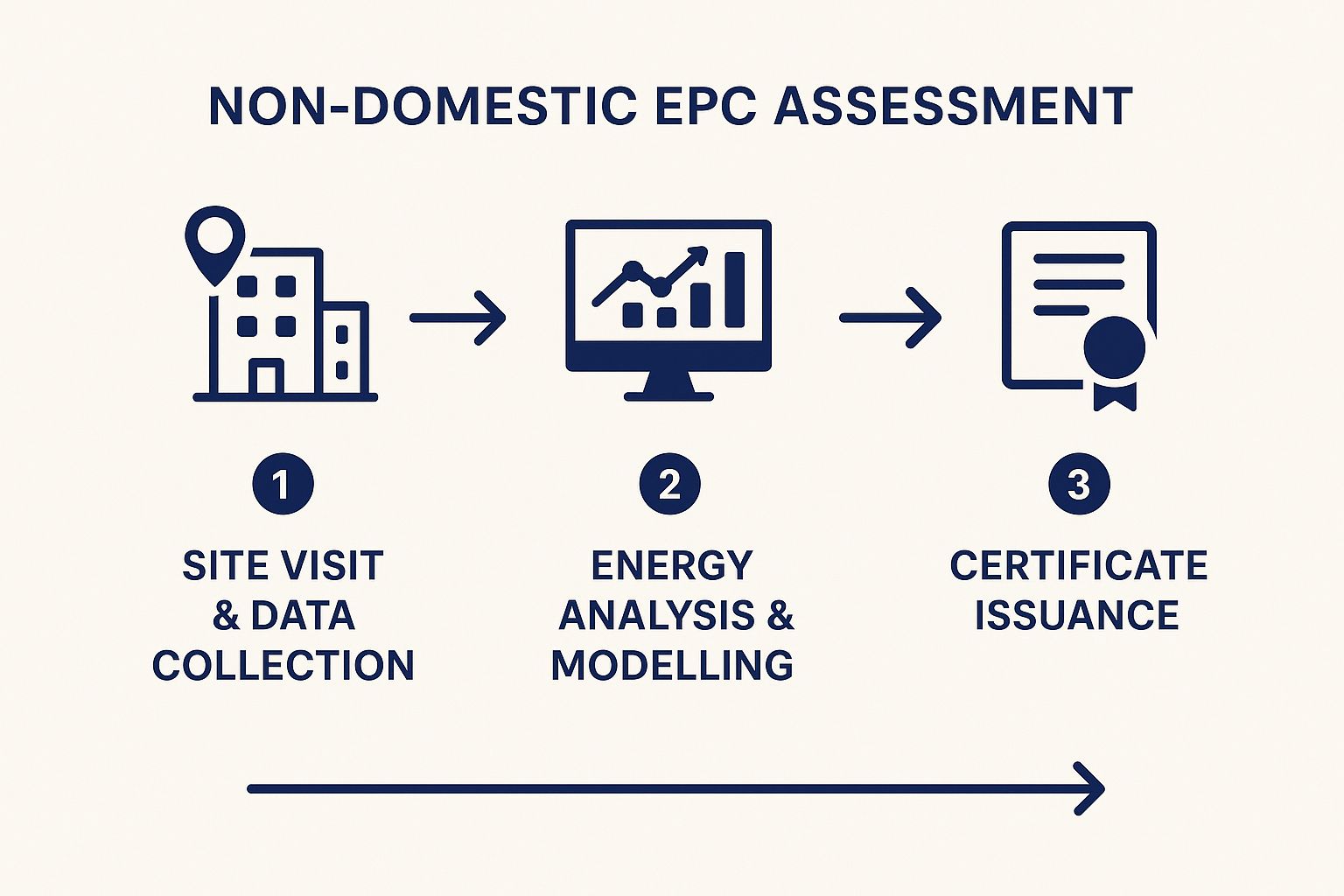
As you can see, the site visit is the foundational first step. It leads directly to the technical analysis that ultimately determines your building’s rating.
From Data to Certificate
After the site visit, the real work begins for the assessor. They take all the data they’ve collected and plug it into a government-approved software program called the Simplified Building Energy Model (SBEM).
SBEM acts like a sophisticated calculator. It uses standardised assumptions about how buildings are used to process the specific data from your property. This ensures a fair and consistent rating system across all commercial buildings.
This software models your building’s energy use and calculates its carbon dioxide emissions. The final output is your official A-G rating and the all-important recommendation report, which gives you tailored advice on how you can improve your building’s energy performance.
Decoding Your EPC Rating and Recommendation Report
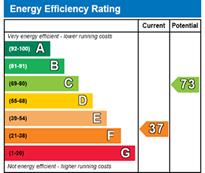
Getting your non-domestic energy performance certificate is one thing, but knowing what to do with it is where the real value lies. This document isn’t just a piece of paper for compliance; it’s a strategic guide for unlocking a more efficient, cost-effective, and marketable commercial property.
Think of the A-G rating as a simple health check for your building’s finances. A ‘G’ rated property isn’t just inefficient—it’s a sign of higher running costs, potential legal headaches down the line, and a less attractive asset overall. On the flip side, an ‘A’ rating points to a lean, modern property with much lower outgoings and a serious competitive edge in the market.
Understanding the Ratings in Context
Your EPC rating gives you a vital snapshot of where your building currently sits on the efficiency scale. When you look at the bigger picture for commercial buildings in England and Wales, you’ll see a huge number of properties are clustered right in the middle.
Since records began in 2008, the majority of certificates have landed in bands C and D. In fact, as of early 2024, over 394,000 buildings were rated ‘C’ alone. This tells us there’s a massive stock of properties with just moderate efficiency and, therefore, a clear opportunity for improvement.
This context is crucial. If your property is rated ‘D’ or ‘E’, you’re certainly not alone. But with regulations getting stricter all the time, standing still isn’t really an option anymore. This is where the recommendation report becomes your best friend—it’s your bespoke action plan for climbing that efficiency ladder.
Unpacking the Recommendation Report
This is arguably the most powerful part of your EPC. The recommendation report isn’t a generic, one-size-fits-all list of suggestions. It’s a customised plan tailored specifically to your building, showing you exactly what steps to take to improve your rating. To get a deeper handle on complex documents like these, some are now using AI-powered property analysis tools to break things down.
The report is clever about it, too. It prioritises improvements based on their potential impact, which helps you make smart investment decisions from the get-go.
Think of the recommendation report as your roadmap. It shows you the route from your current EPC rating to a much better potential one. It strategically outlines the steps needed, estimates the cost, and even projects the payback period for each, allowing you to make data-driven decisions on where to invest first for the greatest return.
Typically, you’ll find the recommendations broken down into a few helpful categories:
- Short-Payback Measures: These are your “quick wins”—the low-hanging fruit with a rapid return on investment. Think about switching all your lighting to high-efficiency LEDs or upgrading the controls on your existing heating system.
- Medium-Payback Measures: These are more significant upgrades that take a bit longer to pay for themselves. This could be things like topping up your loft insulation or swapping out an old, clunky boiler for a modern, condensing model.
- Long-Payback Measures: These are the major capital investments with longer-term benefits. This category often includes big-ticket items like installing high-performance double or triple glazing, adding external wall insulation, or investing in renewable technologies like solar panels.
Each suggestion comes with an estimated cost and a projection of how it will nudge your property’s rating upwards. By properly analysing this report, you can build a phased improvement plan that fits your budget, lifts your EPC rating, and ultimately, gives your bottom line a healthy boost.
Actionable Steps to Improve Your Commercial EPC Rating
Moving from simply understanding your non-domestic energy performance certificate to actively improving it is one of the smartest business decisions you can make. A better rating doesn’t just keep you on the right side of the law; it directly cuts your running costs and makes your property far more attractive on the market. The trick is to have a clear plan, starting with the low-hanging fruit before you even think about the bigger, more expensive projects.
Think of it like a pyramid of improvements. The base is all about quick wins with a fast payback, while the top represents major works that secure the most significant, long-term gains.
Quick Wins and Low-Cost Measures
It’s surprising how much of a difference you can make without a huge upfront investment. These are the foundational steps every building owner should tackle first because they target the most common culprits of energy waste.
Many of these are refreshingly simple fixes:
- Upgrade to LED Lighting: This is probably the easiest and most impactful change you can make. LEDs use up to 90% less energy than old-school halogen or incandescent bulbs and last a whole lot longer. That’s a win for your energy bills and your maintenance budget.
- Improve System Controls: Just installing timers and thermostats on your heating system ensures you’re only paying to heat spaces when they’re actually being used. Smart controls take this a step further, optimising the schedule based on real-world occupancy patterns.
- Draught-Proofing: It might sound minor, but sealing gaps around windows, doors, and where services enter the building is a cheap but incredibly effective way to stop precious heat from leaking out.
Often, the recommendation report that comes with your EPC will point you right to these issues. Tackling them can be all it takes to lift a property from a failing ‘F’ or ‘G’ rating into compliance.
Mid-Tier Upgrades and Investments
Once you’ve ticked off the quick wins, the next level involves more substantial—but still very manageable—upgrades. These have a longer payback period, but they deliver much bigger efficiency gains that will definitely show up on your next EPC assessment.
A modern, efficient boiler or a well-insulated loft might not be visible to your tenants, but the lower energy bills that result are a massive selling point. This is where properties start to move from just being compliant to being genuinely competitive in the market.
Key strategies at this level include:
- Loft and Cavity Wall Insulation: If your building has an uninsulated loft space or empty cavity walls, filling them should be a high priority. It’s a tried-and-tested method for slashing heat loss.
- Boiler Upgrades: Swapping an old, clunky boiler for a modern condensing model can make a serious dent in your heating-related energy consumption.
It’s always worth remembering that many of these upgrades might qualify for financial support. Before committing, take a look at the latest energy efficiency grants for businesses to see if you can get help with the initial costs.
Major Investments for Maximum Impact
If you’re aiming for the top-tier EPC ratings of ‘B’ or ‘A’, you’ll need to look at major, long-term investments. These projects are a significant commitment, but they are what will future-proof your asset against skyrocketing energy costs and even stricter regulations down the line. To really push your property’s performance and secure a top rating, you need to start embracing robust green building practices.
Long-term strategies that pack the biggest punch often involve:
- High-Performance Glazing: Replacing old single or double-glazed windows with modern, high-performance units is a game-changer for minimising thermal loss.
- Renewable Technologies: This is where you can transform your building’s energy profile. Installing solar PV panels, solar thermal for hot water, or heat pumps can drastically reduce your reliance on the grid.
- External Wall Insulation: For buildings with solid walls, adding external insulation is a major undertaking but one that wraps the building in a complete thermal envelope, delivering truly exceptional performance.
To help you weigh up the options, the table below provides a rough guide to what you might expect in terms of cost and impact for various improvements.
EPC Improvement Strategies and Their Impact
| Improvement Action | Cost Level | Potential EPC Rating Impact |
|---|---|---|
| LED Lighting Upgrade | Low | Low to Medium |
| Heating & Cooling Controls | Low | Low to Medium |
| Draught-Proofing | Low | Low |
| Loft & Cavity Wall Insulation | Medium | Medium |
| Boiler Replacement | Medium | Medium to High |
| Window & Glazing Upgrades | High | Medium to High |
| Solar Panel (PV) Installation | High | High |
| External Wall Insulation | High | High |
This gives you a clearer picture of the path ahead, allowing you to create a phased plan that balances your budget with your long-term energy goals for the property.
The Business Case for a Better EPC Rating
Beyond simply ticking a compliance box, a strong non-domestic energy performance certificate rating gives your property a serious commercial edge. It’s about shifting your mindset from seeing energy efficiency as an expense to seeing it as a direct investment in your asset’s performance.
Think of a higher rating as a powerful marketing tool. Prospective tenants are savvier than ever about running costs. An impressive EPC can translate into higher rental income, more stable lease agreements, and fewer of those costly void periods between tenancies.
Boosting Asset Value and Reputation
The knock-on effects hit your bottom line and your brand’s reputation directly. Lower operational costs are a massive draw for any business looking for space, giving you a clear advantage in a competitive market. Our guide on achieving superior energy efficiency for buildings dives much deeper into these strategies.
A strong EPC rating is a clear statement of quality and forward-thinking management. It not only increases the building’s capital value but also showcases a commitment to corporate social responsibility, enhancing your reputation with investors, tenants, and the wider community.
This commitment to sustainability is fast becoming a key differentiator in the commercial property world. It signals that you’re not just maintaining a building, but future-proofing an investment. To see how industry leaders frame this, have a look at this corporate presentation from Ellora EPC Pvt Ltd.
Ultimately, putting money into your building’s energy performance isn’t just about spending less on bills—it’s about boosting your property’s future value and market appeal.
How Long Does an EPC Assessment Take?
This really depends on the building. For a small, straightforward shop, an assessor might only need an hour or two on-site to gather all the necessary data. It’s a relatively quick process.
But for a large, complex property – think a multi-storey office block with sophisticated heating, ventilation, and air conditioning (HVAC) systems – the assessment could easily take up a full day, or sometimes even longer. It’s all about being thorough.
Once the on-site work is done, the assessor takes that data and runs it through specialised software to calculate the final rating. You can usually expect the official certificate and the accompanying recommendation report back in your hands within a few working days.
What if My Building Is Both Domestic and Commercial?
This is a very common situation. Think of a pub with a flat for the landlord upstairs, or a high-street shop with living quarters attached.
For these “mixed-use” properties, the rules are quite clear. The commercial and residential parts of the building are treated as separate entities. This means each part needs its own, distinct Energy Performance Certificate.
You’ll need a Non-Domestic Energy Assessor for the business part and a separate Domestic Energy Assessor to handle the living space.
A single property with both commercial and residential areas requires two separate certificates: a non-domestic EPC for the business section and a domestic EPC for the home, each reflecting how that specific part of the building is constructed and used.
Are Listed Buildings Exempt from Needing an EPC?
This is a point of frequent confusion, and it’s a big one. The short answer is no, listed buildings are not automatically exempt from needing a non-domestic EPC when they are sold or let.
The nuance comes in with the Minimum Energy Efficiency Standards (MEES). A listed building may be exempt from having to meet these minimum standards, but only if the required upgrades would “unacceptably alter” its character or appearance.
This isn’t a simple get-out clause. You need to provide solid evidence to prove it – often in the form of a report from a conservation officer or another qualified expert. This exemption then has to be officially registered. It’s a specific, evidence-based process, not a blanket exception.
At Luths Services, we specialise in helping property owners make sense of energy efficiency and compliance. Our expert team provides the accredited assessments and strategic advice you need to get your building performing at its best.
Find out how we can help by visiting Luths Services.


